
St. Tammany District Court Overview
Louisiana's primary trial courts are District Courts. St. Tammany Parish is part of the 22nd Judicial District Court, a district that also includes Washington Parish. The District Court is the main venue for civil, criminal, family, juvenile, traffic, child support, succession, tutorship, and specialty-court proceedings that produce St. Tammany Parish court records. The 22nd JDC website is the court-side source for divisions, calendars, jury duty, specialty courts, language access, local agencies, and forms.
The District Court and the Clerk of Court have different roles. The court manages judges, divisions, hearings, calendars, specialty programs, and trial-court process. The Clerk maintains the filed case record and certified copies. A user trying to search St. Tammany Parish District Court records usually starts with Clerk-backed search access, then checks the 22nd JDC calendar for hearing context or court-date information.
The 22nd JDC specialty-courts source shows how District Court programs sit inside the same local trial-court ecosystem.
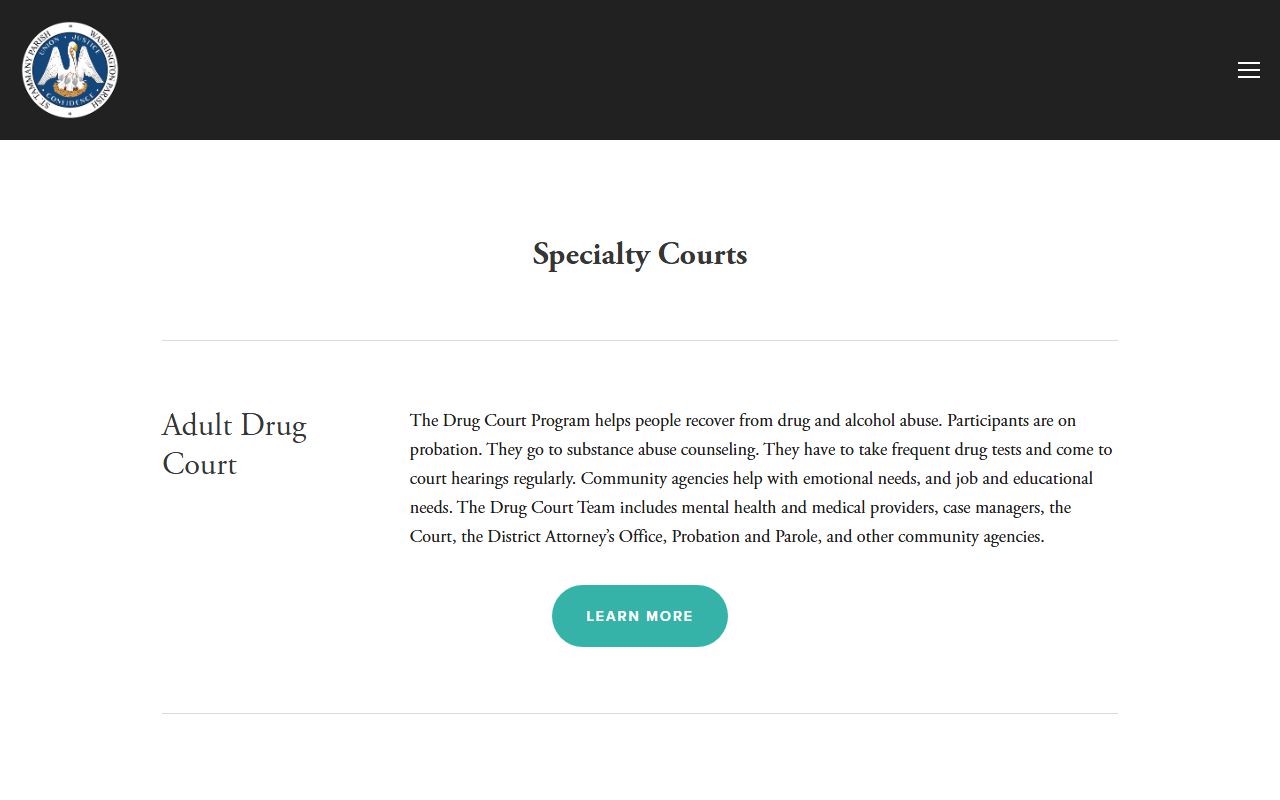
Specialty-court program pages help explain why some criminal, DWI, drug, veterans, re-entry, family, and intervention matters may have court-supervised treatment or monitoring activity in addition to standard docket events.
St. Tammany Court Divisions
The 22nd JDC site lists divisions A through L plus commissioners and hearing officers. Research did not identify separate numbered county courts for St. Tammany Parish. Instead, the local District Court structure uses divisions and judicial officers within the 22nd Judicial District. The main courthouse address for St. Tammany Parish District Court access is the Justice Center in Covington.
| Division / Officer | Official link text | Address | Phone |
|---|---|---|---|
| Division A | Judge Black | 701 N Columbia Street, Covington, LA 70433 | Clerk 985-809-8700 |
| Division B | Judge Zeller | 701 N Columbia Street, Covington, LA 70433 | Clerk 985-809-8700 |
| Division C | Judge Swartz | 701 N Columbia Street, Covington, LA 70433 | Clerk 985-809-8700 |
| Division D | Judge Keller | 701 N Columbia Street, Covington, LA 70433 | Clerk 985-809-8700 |
| Division E | Judge Burris | 701 N Columbia Street, Covington, LA 70433 | Clerk 985-809-8700 |
| Division F | Judge Lobello | 701 N Columbia Street, Covington, LA 70433 | Clerk 985-809-8700 |
| Division G | Judge Gardner | 701 N Columbia Street, Covington, LA 70433 | Clerk 985-809-8700 |
| Division H | Judge Zaunbrecher | 701 N Columbia Street, Covington, LA 70433 | Clerk 985-809-8700 |
| Division I | Judge Badeaux | 701 N Columbia Street, Covington, LA 70433 | Clerk 985-809-8700 |
| Division J | Judge Creel | 701 N Columbia Street, Covington, LA 70433 | Clerk 985-809-8700 |
| Division K | Judge Oppenheim | 701 N Columbia Street, Covington, LA 70433 | Clerk 985-809-8700 |
| Division L | Judge Amacker | 701 N Columbia Street, Covington, LA 70433 | Clerk 985-809-8700 |
| Commissioner | James Burke | 701 N Columbia Street, Covington, LA 70433 | 985-809-5380 |
| Hearing Officer | Amanda Trosclair, Support Enforcement | 701 N Columbia Street, Covington, LA 70433 | Clerk 985-809-8700 |
The 22nd JDC local agency source helps connect District Court users with public defender and court ecosystem contacts.
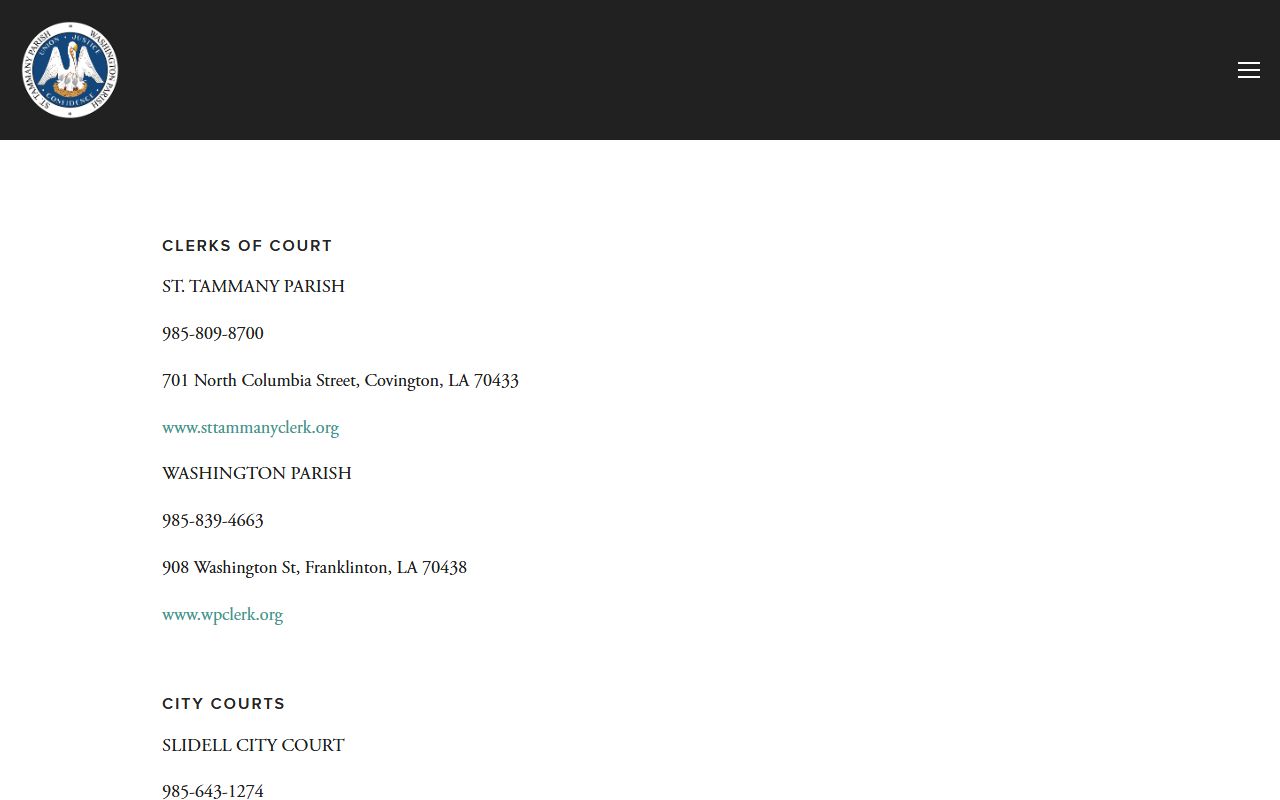
Those agency links are useful when a District Court case also involves defense counsel, prosecution, support enforcement, or court-related services.
District Court vs Local Courts
St. Tammany Parish should not be described with a generic county-court model. Louisiana uses parish and District Court terminology. The research identifies lower courts as Justice of the Peace Courts, Mayor's Courts, and Municipal Courts or City Courts. Those lower venues may handle local ordinances, small local civil issues, evictions, municipal traffic, and some bench-warrant issues, while the District Court remains the main general-jurisdiction trial court.
| Issue | District Court | Municipal / City / Mayor's Courts | Justice of the Peace Courts |
|---|---|---|---|
| Main role | General trial court for civil, criminal, family, juvenile, traffic, support, succession, and specialty-court matters. | Local ordinance, municipal, city, mayor's court, and some traffic or bench-warrant matters depending on venue. | Local lower-court matters such as certain small civil, eviction, or local disputes depending on law and location. |
| Records path | Clerk Civil or Criminal Department and re:SearchLA for current case records. | Contact the issuing local court when the citation or warrant is municipal or city-court based. | Contact the relevant justice of the peace court for its own docket or file. |
| Appeal context | District Court appeals route to Louisiana Courts of Appeal and then the Louisiana Supreme Court when applicable. | Local appeal routes depend on the court and case type. | Local appeal routes depend on the court and case type. |
| Best clue | 22nd JDC division, Clerk case number, or District Court calendar setting. | Ticket, summons, mayor's court, city court, or municipal court name. | JP ward, precinct, or justice court information on the papers. |
St. Tammany Case Flow
District Court records are built over time. The Clerk receives filings, the court sets hearings, and the docket reflects motions, orders, judgments, pleas, trial settings, or sentencing. The 22nd JDC calendar is important because it shows court schedule categories such as felony jury trial weeks, civil jury or bench trial weeks, traffic court, misdemeanors, juvenile court, felony motions, child support, drug court, civil motions, civil pre-trials, felony pre-trials, family matters, and arraignments.
Criminal flow: Arrest › Magistrate / First Appearance › Indictment or Information › Arraignment › Pretrial › Trial › Sentencing › Appeal
Civil flow: Petition Filed › Answer › Discovery › Mediation › Trial › Judgment › Appeal
For current case lookup, re:SearchLA is the Clerk-linked search channel. For hearing timing, the 22nd JDC court calendar is the court-linked channel. If a record needs certification, the Clerk remains the issuing office.
The 22nd JDC jury-duty source supplies courthouse and jury context for District Court users.
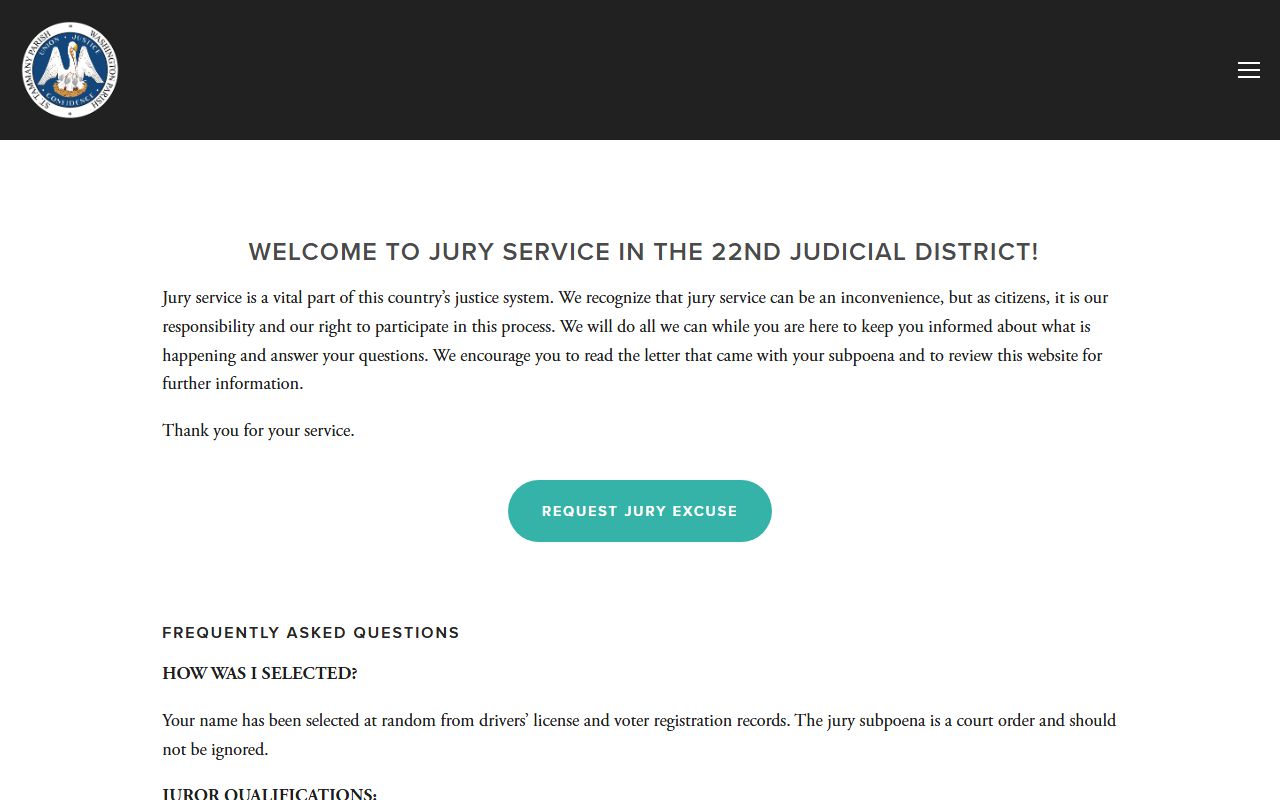
Jury-duty and calendar information can matter when a case is set for a felony jury week, civil jury week, or bench-trial week.
Civil, Family, and Criminal Divisions
St. Tammany Parish District Court case types are not limited to one narrow docket. The Clerk Civil Department processes civil and domestic suits, adoptions, commitments, successions, tutorships, and appeals. The Clerk Criminal Department processes misdemeanor, felony, juvenile, non-support, and traffic violations. The District Attorney prosecutes state traffic-law violations in St. Tammany and Washington Parishes when the ticket was issued under state traffic law and the case is within District Court jurisdiction.
Specialty courts add another layer to the District Court record. The 22nd JDC identifies Adult Drug Court, Drug Court Co-Occurring Track 2, Family Preservation Court, Court Intervention Services, Re-Entry Court, Sobriety/DWI Court, and Veterans Court. These programs may add treatment, testing, progress hearings, probation-related activity, or court-supervised plans to a case history.
| Program | District Court role |
|---|---|
| Adult Drug Court | Probation, treatment, drug testing, and regular court hearings for eligible participants. |
| Family Preservation Court | Treatment-focused support for parents while DCFS focuses on child safety. |
| Re-Entry Court | Five-year model tied to prison entry, return to community, jobs, treatment, and court supervision. |
| Sobriety / DWI Court | Voluntary program for non-violent offenders recovering from alcohol abuse. |
| Veterans Court | Program for veterans with criminal cases, subject to DA approval based on criminal history and military records. |
Judicial Circuit / District
St. Tammany Parish belongs to the 22nd Judicial District with Washington Parish. Appeals from Louisiana district courts go to the Louisiana Courts of Appeal, and the Louisiana Supreme Court is the court of last resort. Federal cases are separate and route to the U.S. District Court for the Eastern District of Louisiana, the U.S. Bankruptcy Court for the Eastern District of Louisiana, or the U.S. Court of Appeals for the Fifth Circuit depending on the case.
District Court rules and appendices can affect local court practice. The 22nd JDC links statewide rules and appendices through the Louisiana Supreme Court system. For record users, this means local calendars, division practice, and filing rules can matter in addition to the public case search.
The 22nd JDC orders and forms source gives District Court users an official forms channel.
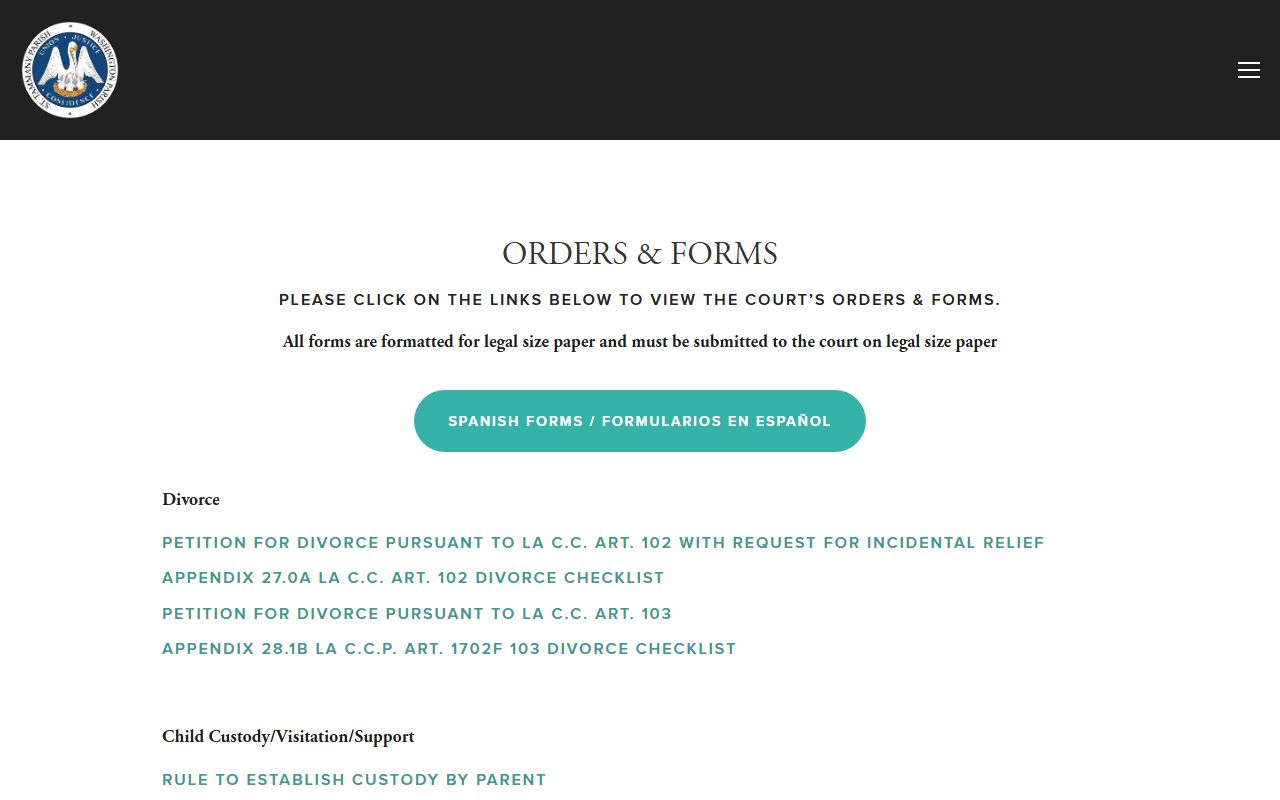
Forms and orders are court-side resources; filed copies and certified record copies still route through the Clerk of Court.
Magistrate and Lower Courts
The 22nd JDC structure includes commissioners and hearing officers as well as District Court divisions. Research identifies Commissioner James Burke, a commissioner role for protective orders and emergency custody, and a support-enforcement hearing officer. STPSO contact resources list Commissioner Burke at 985-809-5380. These roles can affect protective-order, emergency-custody, and support-related proceedings even when the core court record remains tied to the District Court and Clerk.
Lower courts still matter for St. Tammany Parish court-record research. Mayor's courts, municipal or city courts, and justice of the peace courts may handle local ordinance cases, local traffic matters, small local civil issues, evictions, and bench-warrant issues. If a citation, summons, or warrant names one of those lower venues, the District Court search may not be the correct first stop.
The 22nd JDC language-access source is a court-side resource for users who need interpreter or language-access information.
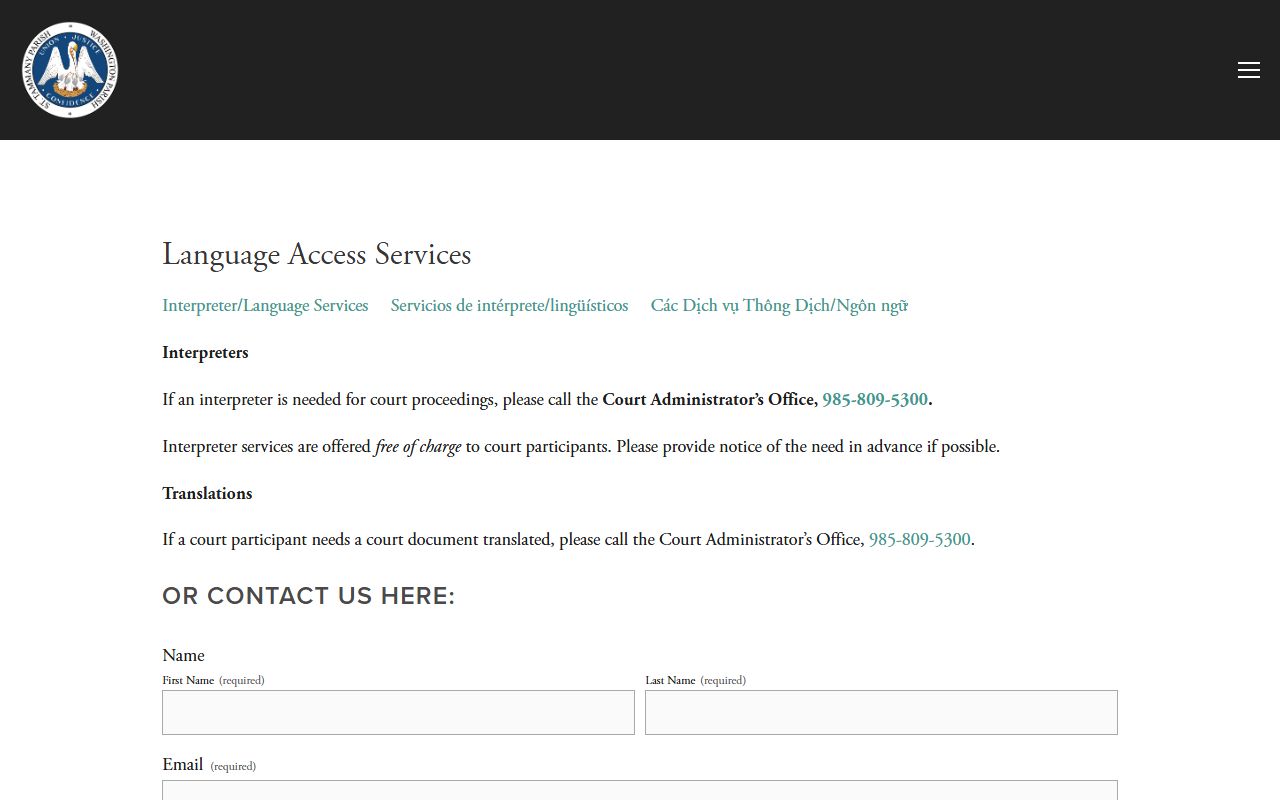
Language access is part of courthouse usability, especially for hearings where a person must understand court dates, orders, and required appearances.
The Louisiana district-court rules source provides statewide rule context for District Court practice.
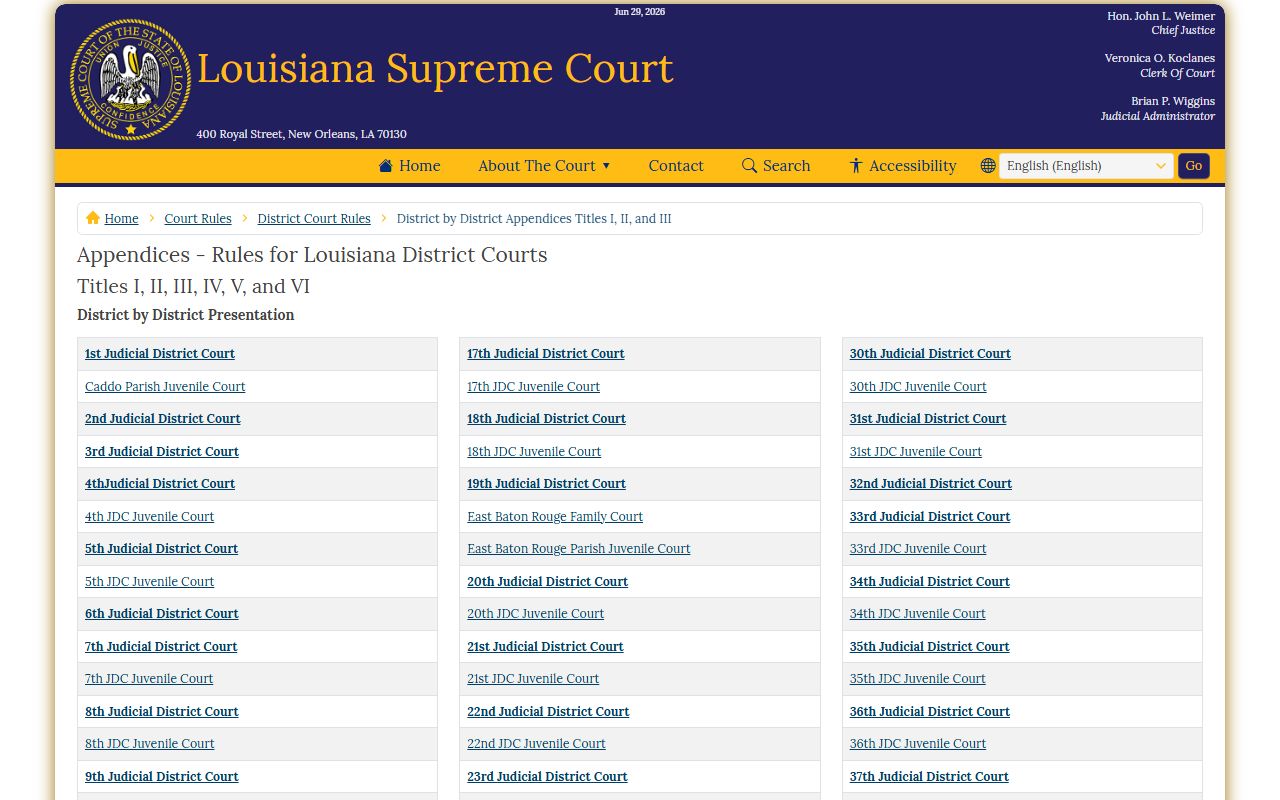
Rules and appendices do not replace the case docket, but they help explain why local filing, calendar, and division procedures may differ from a simple name search.